

Disclaimer: This content is intended for general informational and educational purposes only. The insights shared by the host and featured medical expert are not medical advice, diagnosis, or treatment. Please consult a qualified healthcare professional for individual medical evaluation.
You have probably held your urine longer than you should have today. Most women have. And most do not know what that quietly does to the body over time.
In this episode of Let’s Ask The Doctor, a senior doctor explains exactly what happens inside the body when we ignore the small signs. And why a UTI that seems minor can sometimes become something far more serious.
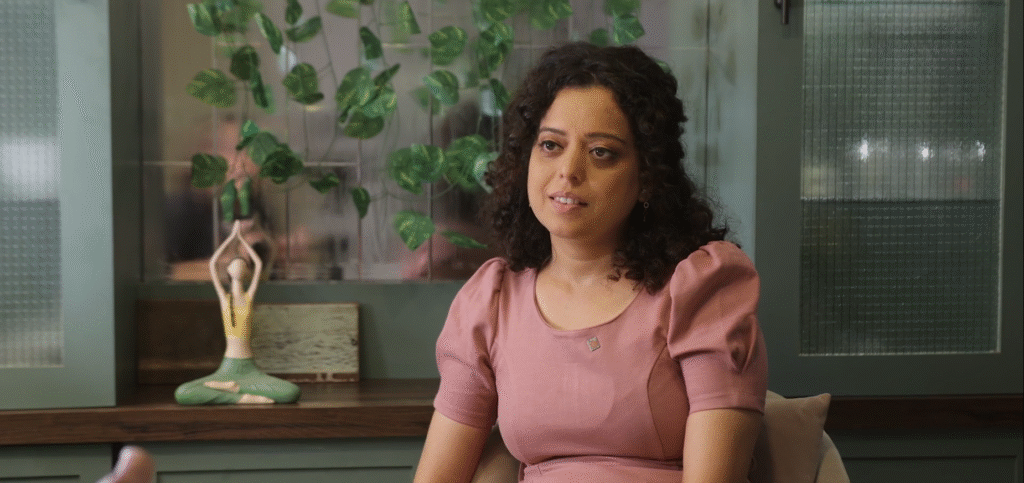
Dr. Suruchi Desai, Director of High-Risk Obstetrics and Senior Consultant at Nanavati Max Super Speciality Hospital, Mumbai. Dr. Desai has 25 years of clinical experience, over 2,000 successful deliveries, and is recognised among India Today’s Top Doctors. She holds a Post Graduate Qualification in High-Risk Obstetrics from Fetal Medicine Barcelona and is ISB Certified in Women’s Leadership and Healthcare Management.
In Episode 1 of Let’s Ask The Doctor, Dr. Desai joined host Preeti Jain, a media professional with 20+ years of experience and an Advanced Yoga Certified Practitioner, to talk about Urinary Tract Infections. What they are, what is driving their rise among Indian women, and what every woman should know.
What Is a UTI and How Do You Know You Have One?
UTI stands for Urinary Tract Infection.
Dr. Desai explains that frequent urination alone does not confirm a UTI. The real signs are more specific. Burning during urination, a strong urge to go with very little output, pain at the start or end of passing urine, and a feeling that the bladder is not fully empty even after a washroom visit. Low backache and a general sense of being unwell can also be part of the picture.
Women approaching menopause may experience similar symptoms due to estrogen deficiency, which can reduce bladder capacity. According to Dr. Desai, age and individual context are important when reading your own symptoms.
Why Are More Indian Women Getting UTIs Today?
Dr. Desai points to a very simple root cause. Indian women are not drinking enough water.
Long work hours, back-to-back schedules, long commutes, and poor public washroom facilities have quietly led women to reduce their water intake. The thinking is: drink less, need to go less. But India is a tropical country. The body loses significant fluid through sweat every day, and that needs to be replaced. Two and a half to three litres of water a day is what Dr. Desai recommends, unless there is a medical reason to restrict fluids.
When water intake stays low, urine becomes more acidic. That is when the burning starts. When the bladder is repeatedly overfilled and not emptied fully, the stale urine inside becomes a breeding ground for bacteria. Dr. Desai compares it to an earthen pot. You would not leave old water sitting in it for days.
Can Food and Lifestyle Habits Make It Worse?
Yes, according to Dr. Desai.
She has seen patients with recurring UTIs whose lab reports showed no clear infection, yet symptoms persisted. In many of these cases, the connection was food. Ready-to-eat masalas with MSG, artificial food colors, excessive spice, and sugar can irritate the bladder lining and dehydrate the body over time. Smoking and alcohol have a similar effect.
Pad hygiene during periods also plays a role. Dr. Desai advises changing sanitary pads every four to six hours. When blood collects on a pad for too long, it disturbs vaginal pH and gives bacteria the conditions they need to grow. A vaginal infection can then trigger a urinary one.
Why Are Women More Vulnerable to UTIs Than Men?
The answer lies in anatomy, says Dr. Desai.
A woman’s urethra, the passage through which urine exits the body, is significantly shorter than a man’s. This shorter passage makes it easier for bacteria to travel upward into the bladder. The vagina and the urethra are also positioned very close to each other, which means an infection in one area can sometimes affect the other.
Is There a Hygiene Habit That Could Be Making Things Worse?
Dr. Desai raises one that often goes unnoticed: the bathroom jet spray.
Since jet sprays became common in Indian homes, she has seen a rise in resistant urinary infections. Most people rinse from back to front without realising it. This carries bacteria from the anal area, particularly E. coli, toward the urinary opening. E. coli is now appearing frequently in urine cultures and is resistant to many common antibiotics. Rinsing from front to back is a small correction with a meaningful impact.
When Should You Stop Managing This at Home and See a Doctor?
Dr. Desai offers clear guidance here.
If symptoms do not ease within a day of hydrating well, or if fever or low back pain develops, that is the time to see a doctor. She also cautions against stopping a prescribed course of medicine midway, even when you begin to feel better. The infection is not fully cleared at that point. Stopping early can lead to resistant bacteria that are far harder to treat.
She has seen patients who needed 20 to 30 days of treatment because of resistance caused by an incomplete earlier course.
What Are Three Simple Things Every Woman Can Do?
Dr. Desai’s practical advice for three common situations:
- During travel: Drink water through the journey. Try not to hold urine for long stretches. The discomfort of stopping is far smaller than the cost of ignoring it.
- During periods: Change pads every four to six hours without exception.
- Around sexual activity: Emptying the bladder before and after can help reduce the risk of infection.
Dr. Desai closed the conversation with one line that says it all.
“If you have to hold something, please hold your horses. Not your urine.”
Watch the Full Episode
The full conversation between Dr. Suruchi Desai and Preeti Jain covers:
- How bladder capacity works and what happens when it is regularly overstretched
- Honeymoon cystitis and what newly sexually active women should know
- The truth about cranberry juice and whether coconut water is a better option
- Home remedies like fenugreek and ajwain and whether they suit everyone
- What tests to ask for if UTIs keep coming back
Watch the full episode on the Let’s Ask The Doctor YouTube channel.
Let’s Ask The Doctor | Real doctors. Real conversations. Every 15 days on YouTube. Hosted by Preeti Jain, a media professional with 20+ years of experience and an Advanced Yoga Practitioner. Subscribe on YouTube to never miss an episode.